NCRTC operated 47 extra Namo Bharat trips on the Delhi-Meerut corridor across August 27 and 28 to accommodate Raksha Bandhan travel demand.
The additional services brought train frequency down to eight-minute intervals on both days, a notable increase over the corridor’s standard schedule.
Services spanned the entire route from Sarai Kale Khan in Delhi to Modipuram in Meerut, giving commuters greater access across the corridor.
NCRTC said the added frequency was meant to particularly help women travelling to meet their brothers for the festival, along with families travelling together.
The Delhi-Ghaziabad-Meerut RRTS corridor runs roughly 55 kilometres across eleven stations, offering a faster alternative to road travel between the cities.
The Namo Bharat service has positioned itself as a faster, more predictable alternative to road travel on the often-congested Delhi-Meerut corridor, particularly during high-traffic festival periods.
The enhanced services covered the entire operational corridor between Sarai Kale Khan in Delhi and Modipuram in Meerut, giving commuters more frequent options across the full route.
NCRTC said the extra trips were aimed at accommodating the seasonal spike in passenger footfall as families travelled to be together for the festival.
The corridor has been steadily ramping up frequency since its launch, with NCRTC periodically adding services around major festivals and long weekends to manage demand spikes.
The Delhi-Ghaziabad-Meerut RRTS corridor spans roughly 55 kilometres and connects eleven stations, offering a faster alternative to road travel between the three cities.
NCRTC has previously run similar special schedules during other major festivals, treating frequency increases as a routine tool for managing predictable demand surges.
The additional trips were particularly aimed at benefiting women travelling to meet their brothers for Raksha Bandhan, as well as families making the journey together.
Regular commuters on the corridor also benefited from the shorter wait times during the two-day window, even outside the specific festival-driven travel demand.
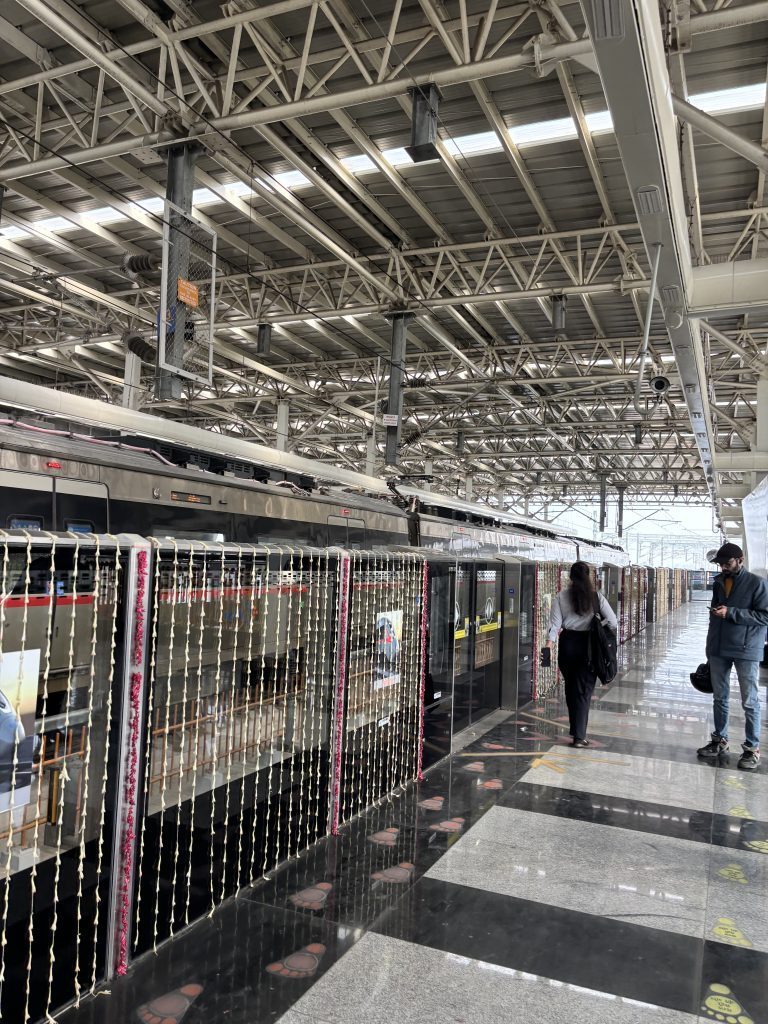
Photo of a Namo Bharat RRTS platform, Wikimedia Commons, CC BY-SA 4.0