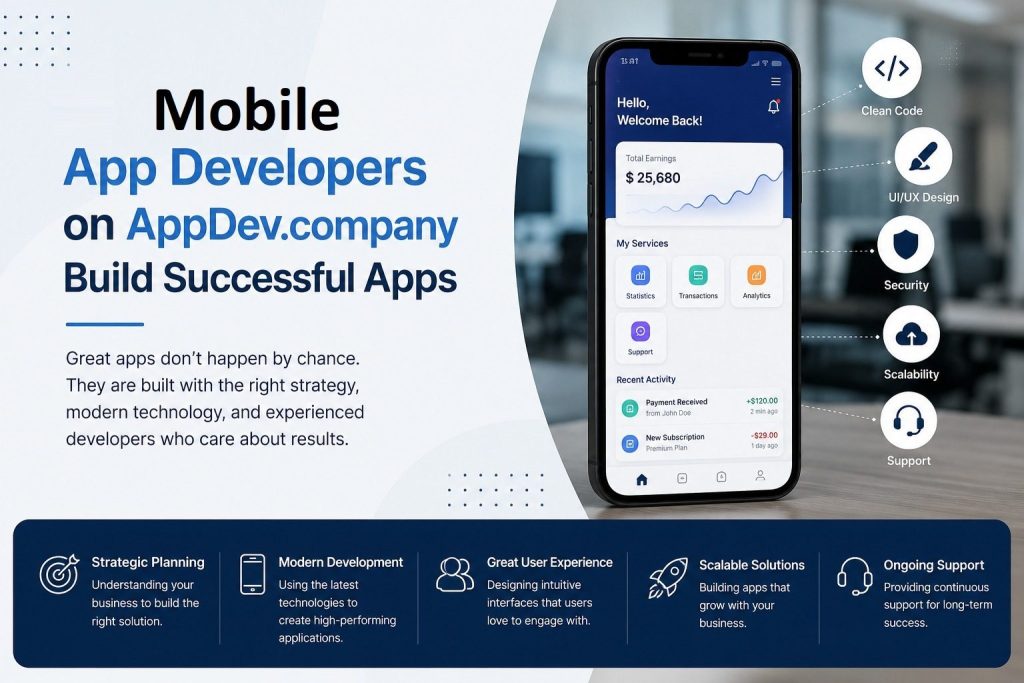
Publishing a mobile app to the App Store or Google Play often gets treated as a finish line, but App Dev Company, working with its mobile app developers, positions that moment as the start of an ongoing support relationship rather than the end of a project.
According to the company, operating systems receive regular updates, customer expectations change over time, and businesses frequently introduce new services after an app’s initial launch, all of which require continued technical attention rather than a one-time build followed by no further involvement. Professional mobile app developers generally continue improving applications through maintenance, feature enhancements, security updates, and performance optimization well after go-live, treating post-launch support as a distinct, ongoing phase of a project’s lifecycle rather than an optional add-on.
Why Operating System Updates Create Ongoing Work
Apple and Google update their mobile operating systems on a regular cycle, and these updates can affect how an existing application performs or whether it remains fully compatible with current devices and app store requirements, meaning even an application that required no functional changes can still need technical updates simply to keep pace with the platforms it runs on. An App Dev Company that treats this ongoing compatibility work as part of standard maintenance, rather than a separate paid service triggered only when something breaks, generally provides more predictable long-term reliability for the businesses it works with.
Feature Enhancement as a Continuous Process
Beyond pure maintenance, businesses generally continue evolving their products after launch, adding new services or adjusting existing functionality based on user feedback and changing market conditions, work that requires ongoing access to mobile app developers familiar with an application’s existing architecture rather than starting fresh with a new team unfamiliar with the codebase. Continuity between the original development team and the team providing ongoing support can meaningfully affect how efficiently new features get implemented and existing issues get resolved.
What Businesses Should Clarify About Post-Launch Support
For businesses evaluating a development partner, understanding exactly what post-launch support includes — which types of updates are covered under a standard maintenance arrangement versus billed separately, and what response times apply for critical issues — remains an important detail to clarify before a project begins, since the quality of ongoing support often matters as much to an application’s long-term success as the quality of its original development.
Budgeting for ongoing maintenance from the outset, rather than treating it as a cost to figure out only after launch, generally leads to fewer surprises for businesses regardless of which development partner they work with, since the cost of keeping an application current with platform changes and evolving user expectations doesn’t disappear once the initial build is complete.
Analytics and monitoring tools integrated during development can also make post-launch support considerably more efficient by giving a maintenance team visibility into real usage patterns and technical issues, rather than relying solely on user-reported problems, which tend to arrive inconsistently and often lack the technical detail needed to diagnose an issue quickly.
Visit- https://appdev.company/