India’s Supreme Court has struck down a law passed by Karnataka state.
The law had protected appointments from a 2011 recruitment cancelled over corruption.
The court said legislatures cannot annul final court judgments.
The state must hold fresh recruitment.
Candidates from 2011 get a one-time age relaxation.
A Criminal Investigation Department inquiry followed complaints of irregularities, according to the same report.
The state cancelled the recruitment in 2014, and the Karnataka High Court upheld the cancellation in 2018, according to the Daily Pioneer, while another report gives different years, so the dates differ between reports.
The Supreme Court later declined to interfere with the High Court’s decision, according to the Daily Pioneer.
The state enacted the validation law in 2022, and it was challenged in the Supreme Court, according to the same report.
The Karnataka government must now notify fresh recruitment for the vacant Group A and Group B posts under the existing rules, according to LiveLaw.
Candidates from the 2011 recruitment, including the appellants and those not found tainted, get a one-time age relaxation to compete in the new recruitment, according to the reports.
Anyone selected in the fresh recruitment gets seniority only from the date of the new appointment, with no back wages or notional appointment for earlier years, according to LiveLaw.
For current employees who are selected again, their earlier service counts towards pension and retirement benefits, according to the reports.
Appointments made under the struck-down law must end, according to the Daily Pioneer.
A validation law is a law passed to give legal effect to something that a court has found invalid, and courts decide whether it fixes the defect or only overrides the court.
The reports reviewed carried no reaction from the Karnataka government or from the candidates.
The reports are based on news and legal coverage and not on the judgment text, which should be checked for the exact directions.
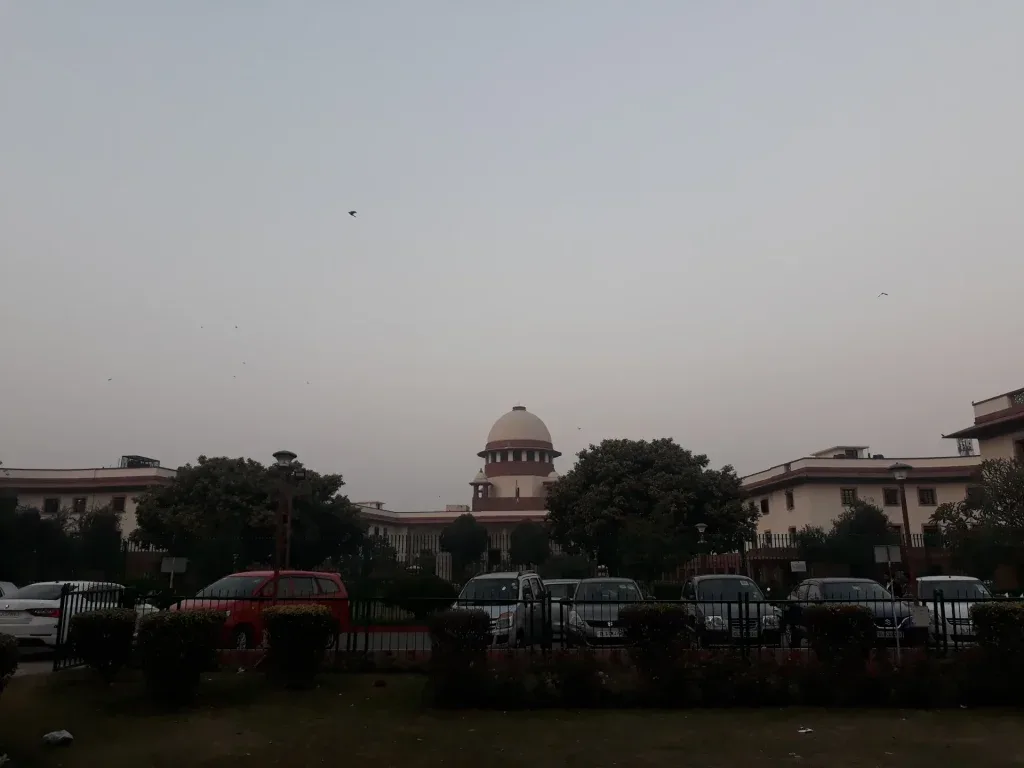
Supreme Court of India (file image), Wikimedia Commons, CC BY-SA 4.0