A nationwide bank strike in India today, September 11, could disrupt services for up to four days due to its timing ahead of the weekend.
The United Forum of Bank Unions is demanding a five-day banking week, along with changes to incentive pay and pension benefits.
The strike falls on a Friday, immediately preceding the regular Saturday-Sunday bank holidays, extending its practical impact on customers.
UFBU wants incentive pay linked to overall bank performance, with uniform incentive days for employees and officers up to Scale VII.
The union has also scheduled a three-day strike from September 28 and warned of an indefinite strike from October 26 without a resolution.
Bank customers have been advised to complete urgent branch-dependent transactions in advance of the strike period.
The four-day disruption arises because September 11 is a Friday, followed by the regular Saturday-Sunday bank holidays, with September 14 also a holiday in some states for Ganesh Chaturthi.
UFBU’s key demands include implementation of a five-day banking week, changes to the performance-linked incentive scheme, and improved pension-related benefits.
The unions want the performance-linked incentive to be tied to overall bank performance, with a uniform number of incentive days for employees and officers up to Scale VII.
UFBU has also announced a separate three-day nationwide strike from September 28, coinciding with the half-yearly closure of banks.
The unions have warned of an indefinite nationwide strike beginning October 26 if their demands are not addressed by the government and bank managements.
Public sector banks are expected to be the most affected by the strike, though private banks may also see some disruption depending on local union participation.
ATM services are typically less affected during bank strikes than branch-level services such as cheque clearing, cash deposits and loan processing.
The five-day banking week has been a long-standing demand of bank employee unions, following similar transitions already adopted in other sectors.
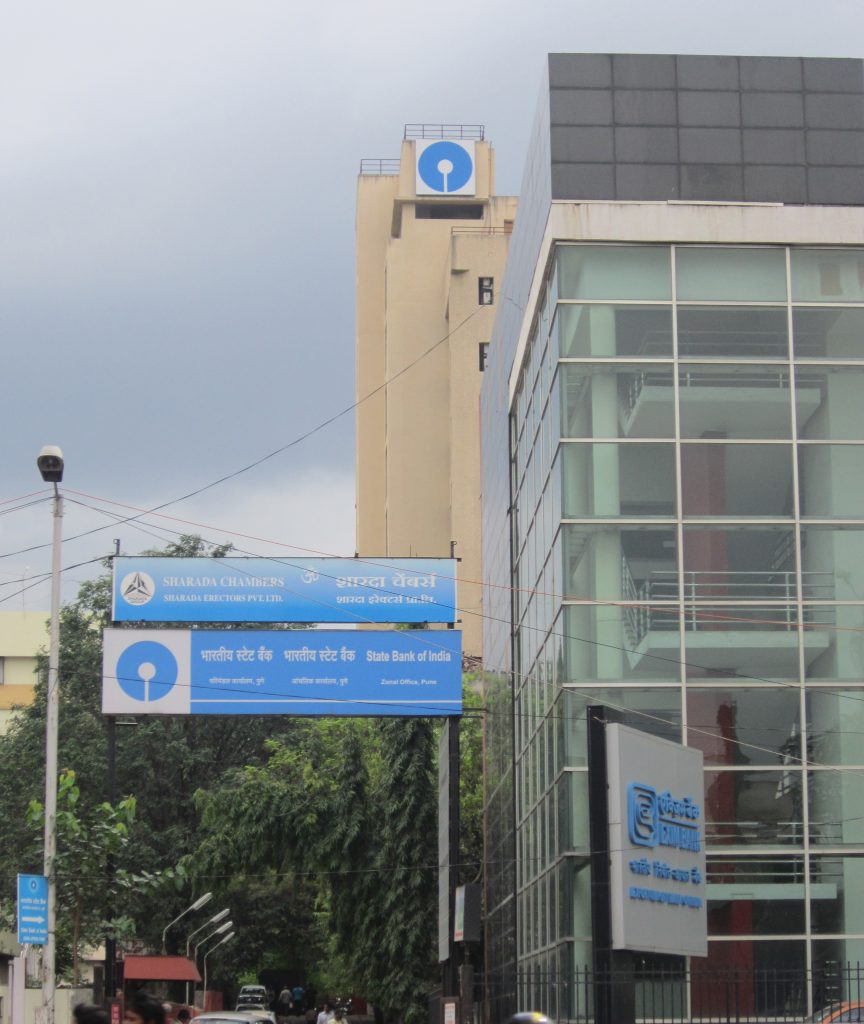
State Bank of India headquarters, Mumbai, Wikimedia Commons, CC BY-SA 3.0