Delhi Police’s Crime Branch has begun a probe into violence at a march to India’s Parliament on July 20.
The march demanded the resignation of the then Education Minister over an exam paper leak.
Police used facial recognition to identify 2,873 suspects with criminal backgrounds.
The Supreme Court earlier barred coercive action against student protesters.
No findings have been reported.
The reports do not say how many of those suspects were involved in specific acts, and they do not say how many have been arrested or charged.
A criminal background does not by itself show that a person took part in the violence, and individual roles are still being examined.
Investigators have reviewed more than 250 videos, including mobile phone recordings, CCTV, drone visuals and police body-worn camera footage, according to The Week.
The July 20 Sansad Chalo march demanded the resignation of the then Education Minister Dharmendra Pradhan over the NEET-UG paper leak.
Security was tightened at Parliament and several entry gates were closed on the day, according to The Daily Jagran.
The Daily Jagran reported that videos showed assaults on women protesters and stone-pelting by protesters.
It also reported that police used lathi charges, water cannons and pellet guns, which caused widespread uproar.
The Supreme Court ordered that no coercive action be taken against student protesters over the FIRs, according to The Week.
It also ordered the immediate release of detained minors with no prior criminal record.
Following those directions, Delhi Police cancelled 17 FIRs against students and other protesters.
The reports available on October 8 did not include a response from the Cockroach Janta Party to the probe.
The probe is ongoing, and the reports do not give any findings on whether the violence was premeditated.
The Delhi Police Crime Branch has registered a case under various sections of the Bharatiya Nyaya Sanhita over the violence during the Cockroach Janta Party, or CJP, protest on July 20.
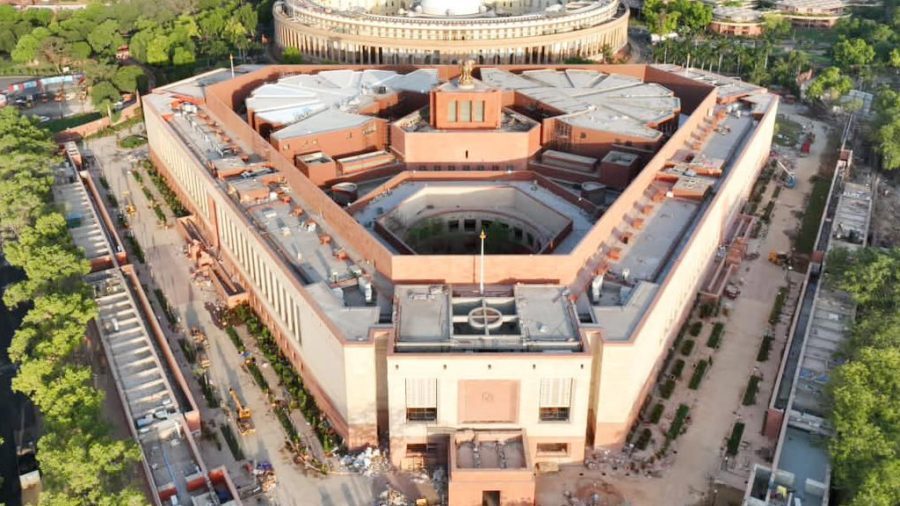
Parliament building, New Delhi (file image), Wikimedia Commons, GODL-India