Indian stock markets recovered on Thursday, with the Sensex ending a three-day fall by gaining 138.38 points to close at 74,902.60.
The Nifty rose 46.80 points to settle at 23,477.80, with both indices staging a late recovery during a volatile closing auction session.
Crude oil prices remained above $100 a barrel throughout the day, the same pressure behind the previous three sessions of losses.
Analysts characterised the bounce as technical, noting that the crude oil and West Asia tensions driving the earlier slide remained unresolved.
Mid-cap and small-cap indices continued to outperform large-cap benchmarks through the recent stretch of volatility.
Indian equity markets have been closely tracking global cues, including US interest rate expectations and Gulf region developments, through September.
Wednesday’s session snapped a three-day losing streak for the Sensex and Nifty, which had fallen on each of the three preceding sessions amid crude oil price pressure.
The recovery came in a volatile closing auction session, with both benchmark indices swinging between gains and losses before settling higher.
Crude oil prices remained above $100 a barrel during the session, continuing to weigh on sentiment even as the indices posted a net gain.
West Asia tensions and their impact on oil supply have been a recurring driver of Indian market volatility through much of September.
Market participants described the session as a technical bounce after three consecutive days of losses, rather than a decisive shift in sentiment.
The BSE Sensex and NSE Nifty are the two primary benchmark indices tracking the overall health of the Indian stock market.
Foreign institutional investor flows and crude oil price movements remained the two factors analysts pointed to as most likely to determine the market’s next direction.
Broader mid-cap and small-cap indices have shown more resilience than the large-cap benchmarks through the recent volatile stretch.
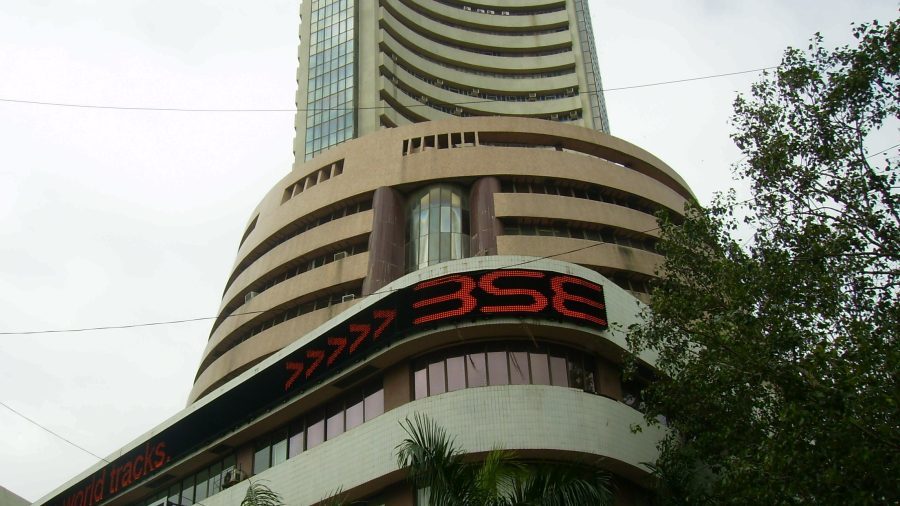
Bombay Stock Exchange building, Mumbai, Wikimedia Commons, CC BY 2.0